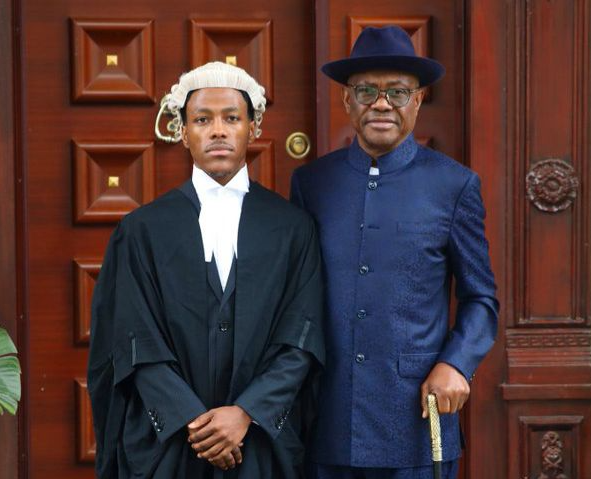
A United Kingdom–based digital forensics investigator, Henry Omorere of Teesside University, has formally approached the Florida Attorney General’s office, seeking updates and disclosures on alleged money laundering and corruption linked to Nigeria’s Federal Capital Territory Minister, Nyesom Ezenwo Wike, and his family.
In a letter dated September 21, 2025, addressed to Florida Attorney General Hon. James Uthmeier—with copies forwarded to the Florida Supreme Court and the Public Information Office—Omorere described the matter as one of “significant public interest with potential criminal violations.” He referenced reports by multiple credible outlets, including SaharaReporters, BusinessDay, and Peoples Gazette, as well as public statements by Nigerian activist Omoyele Sowore, who has also petitioned the Florida authorities.
According to the petition, Wike—whose official annual earnings as a Nigerian public officer are about $5,000—allegedly acquired several multi-million-dollar real estate properties in Winter Springs, Florida, through his wife, Justice Eberechi Suzette Nyesom-Wike, and their children Jordan, Joaquin, and Jazmyne.
Among the properties highlighted are:
- A $2 million mansion at 113 Spring Creek Lane, reportedly bought in March 2025.
- A home at 209 Hertherwood Court, purchased in July 2021 for $459,157 and later transferred to his son Joaquin.
- Another property at 208 Hertherwood Court, purchased in September 2023 for $465,000 and transferred to his daughter Jazmyne.
Omorere alleged that these acquisitions were deliberately structured as all-cash deals and executed via quitclaim deeds signed by Mrs. Nyesom-Wike, with Wike’s name omitted to avoid scrutiny and breach Nigerian asset disclosure laws.
Citing Florida statutes and U.S. anti-money laundering laws, the forensic expert requested:
- Confirmation that Sowore’s petition has been officially received.
- Investigation updates—including when the matter was filed, preliminary steps such as subpoenas or financial tracking, and whether the case is active, referred to agencies like the FBI/IRS, or closed.
- Identification of intermediaries—such as banks, real estate firms, law offices, or shell companies allegedly used to facilitate the purchases.
Omorere stressed the importance of transparency, invoking Florida’s Public Records Law (Chapter 119), and highlighted the need for accountability in cross-border corruption cases. He also pointed to precedents of U.S.–Nigeria cooperation, including the return of $52.88 million in recovered assets to Nigeria.
Describing himself as a “concerned global citizen and advocate for transparency and the rule of law,” Omorere urged Florida authorities to demonstrate that the U.S. will not serve as a safe haven for the proceeds of foreign corruption.