Dr T. A. Adegba
24 October, 2025
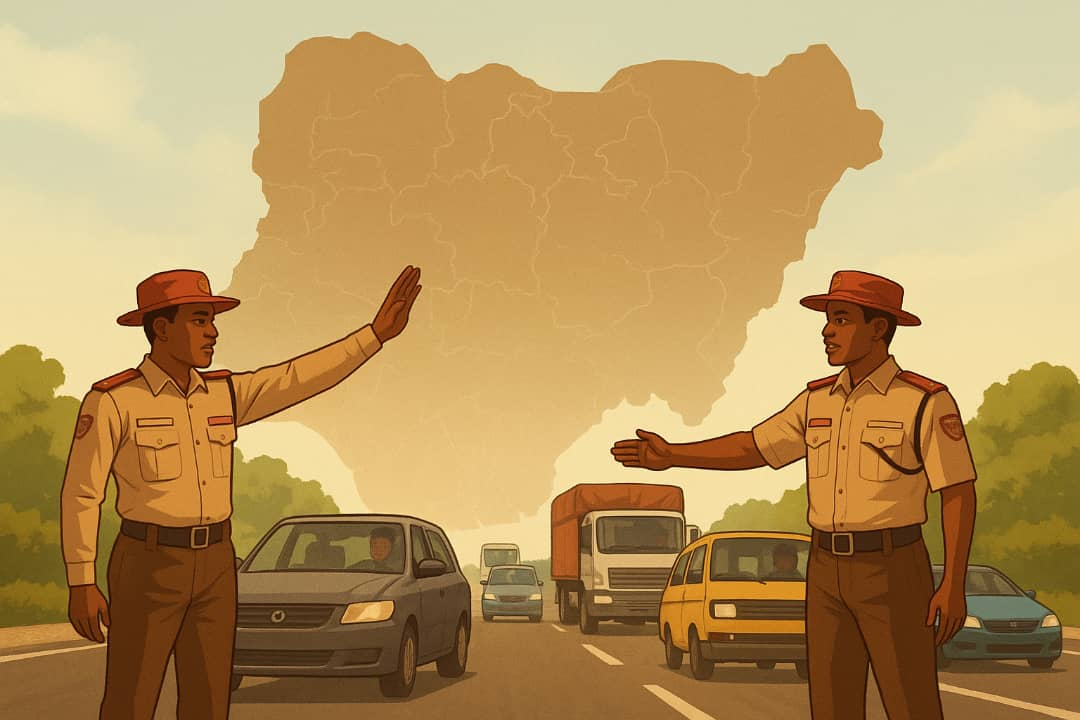
When the National Assembly advanced a bill seeking to arm officials of the Federal Road Safety Corps (FRSC), it did more than stir public outrage — it jolted the conscience of a nation already struggling under the weight of armed excesses. The thought of road marshals brandishing firearms on our highways is not only unsettling; it is a grave policy misjudgment that risks reversing decades of institutional civility.
The FRSC was created to save lives, not to endanger them. It was envisioned as an agency of enlightenment, education, and rescue — not coercion, confrontation, and casualty. To hand them firearms is to rewrite their DNA, replacing their humanitarian mission with militaristic intent.
A Civil Mandate Sliding into Militarization
Since its inception in 1988, the FRSC’s core function has been preventive — to maintain sanity on Nigerian roads through education, enforcement, and emergency response. That civil ethos distinguished the agency from the police and military. But the proposed bill now threatens to collapse that distinction, pulling the Corps into the vortex of Nigeria’s growing militarization of civic space.
This is not modernization; it is mission drift.
It signals a subtle but dangerous normalization of state violence in everyday life — a creeping acceptance that every civic problem demands a gun.
In modern democracies — the UK, Canada, Germany, South Africa — road safety authorities remain unarmed. They rely on technology, collaboration, and public trust, not intimidation. Nigeria’s lawmakers should be learning from those systems, not legislating fear into our traffic culture.
When Frustration Meets Firearms
Let’s be honest: the Nigerian road is already a theatre of frustration — a melting pot of impatience, poor infrastructure, and explosive tempers.
Now imagine introducing firearms into that volatile equation.
Road disputes are common — over seatbelts, licenses, vehicle documents, or perceived disrespect. Many of these encounters already escalate into shouting matches. Add a weapon, and a moment of provocation could escalate into bloodshed.
Emotional intelligence, not armed readiness, is what the FRSC needs most. Even the most disciplined officers have human limits under pressure. A weapon hanging at the waist of a tired, provoked officer transforms an argument into a potential crime scene.
We don’t need to look far for examples — Nigeria’s armed institutions are littered with tragic cases of “accidental discharge” and misuse of power. The FRSC must not join that list.
Policy Myopia and Institutional Confusion
This bill reflects a chronic problem in Nigerian policymaking: the tendency to respond to every institutional weakness with force, rather than reform.
Nigeria already has multiple armed agencies on the highways — the Police, Civil Defence, Army patrols, and, in some areas, DSS operatives. What the FRSC lacks is not weapons, but capacity, synergy, and respect for boundaries.
Arming them would only duplicate security roles and ignite turf wars between agencies. Inter-agency rivalry is already a recurring problem — soldiers and police officers have clashed fatally over jurisdictional egos. Adding another armed actor to that combustible mix is courting chaos.
Besides, if insecurity on highways is the excuse, then the solution is not to arm every agency but to reform the Police, strengthen inter-agency intelligence sharing, and improve response coordination. Multiplying guns doesn’t multiply safety; it multiplies mistakes.
Deeper Dangers: Erosion of Civil Trust
Every uniformed institution draws its legitimacy from public trust. The FRSC, despite its operational flaws, still enjoys relative public goodwill. But the moment officers begin carrying guns, that trust collapses.
Motorists will no longer see them as helpers in distress or educators in road safety; they will see them as potential threats. That perception shift will destroy the agency’s moral authority and defeat its founding purpose.
Arming the FRSC will also embolden impunity. In a system where accountability is weak, a gun in the wrong hands becomes a license to intimidate. What happens when a citizen dies at a checkpoint? Who bears the blame — the lawmaker who signed the bill or the officer who pulled the trigger?
Smarter Alternatives: Reform, Don’t Reload
If safety is truly the concern, then reform — not rearmament — is the answer.
Equip officers with body cameras, communication radios, and GPS systems to ensure transparency and accountability.
Invest in digital traffic monitoring — smart cameras, automated ticketing, and data analytics to replace physical confrontation.
Retrain officers in conflict management, first aid, and emotional intelligence — skills that save lives, not end them.
Deepen collaboration with the Police and NSCDC so that armed backup is available when genuinely needed.
Launch massive public education campaigns that make compliance an act of civic responsibility, not fear of gunfire.
These are 21st-century solutions — tools that build trust, not terror.
A Message to the President: Don’t Sign This Bullet into Law✍️
Mr. President, this bill does not deserve your signature. It deserves your statesmanship — the courage to say no when popular pressure demands a dangerous yes.
Approving this legislation would not strengthen the FRSC; it would weaponize it. It would send a disturbing message that the government believes safety can only be enforced through fear.
What Nigeria needs are armed policies, not armed officers.
Policies armed with intelligence, discipline, data, and accountability.
Because governance should never be about who carries the gun — it should be about who carries the vision.
Conclusion
When the Bullet Meets the Road, Safety Dies First
The Federal Road Safety Corps stands as one of the few agencies that symbolize order and discipline on Nigeria’s highways. To stain that legacy with gunpowder would be a betrayal of its founding spirit.
Let the Corps remain a custodian of sanity, not a symbol of state aggression.
Let us invest in smart enforcement, not armed intimidation.
Nigeria’s highways are dangerous enough; we don’t need bullets added to the mix.
Because when the bullet meets the road, safety dies first.
Dr. T. A. Adegba
Transmitting my thoughts and putting my message across
October 24, 2025